Showing posts with label Nutrition. Show all posts
Showing posts with label Nutrition. Show all posts
Tuesday, November 23, 2010
Thanksgiving Dinner ... by the CrossFit Journal
Click on the blue title to view this amazing video by the CrossFit Journal

Tuesday, September 21, 2010
Your food should be like ...
... MEAT AND VEGETABLES, NUTS AND SEEDS, SOME FRUITS, LITTLE STARCH AND NO SUGAR!
Try this today!
Start with a breakfast!
Have a meal every 4 hour!
Drink enough water during the day:
Quantity -> Your B.W. in pounds/2 = amount of water for the whole day.
Stop the starches at night! Have little starch during the day.
Try to have 4 to 6 portions of vegetables and 2 to 4 portions of fruits in your day.
Try this today!
Start with a breakfast!
Have a meal every 4 hour!
Drink enough water during the day:
Quantity -> Your B.W. in pounds/2 = amount of water for the whole day.
Stop the starches at night! Have little starch during the day.
Try to have 4 to 6 portions of vegetables and 2 to 4 portions of fruits in your day.
Tuesday, September 14, 2010
Recovering From Intense Exercise

Hi guys,
As I told in a previous post, Recovery is THE Key to your training. this where you get all the benefits of your workout. Your body will build itself to adapt to the stress you're putting it into, the activity.
Recovery also means PROPER NUTRITION. In order to recover better and faster your body needs the good nutrients to build and repair the broken tissues, the muscles!
Many of my clients have questions about their recovery diet!
Remember that when you deal with a strict training plan you need to have the proper food intake to recover and repeat the efforts in the next workouts.
Why?
Your muscles break down during an intense workout. It continues evenafter the workout. You can stop this breakdown mode by eating as soon as tolerable after your exercise.
You'll be taking advantage of the 45 minute postexercise window of opportunity to optimally nourish, repair and build muscles.
Refueling is beneficial in 2 ways:
- Carbohydrates stimulate the release of Insuline, an hormone that helps build muscles as well as transports carbohydrate into the muscles to replenish depleted glycogen stores.
- Carbs combined with a little protein creates even a better refueling and building response, and it reduces cortisol, an hormone that breaks down muscle.
When you include Carbs in your recovery diet, you're actually building up the glycogen stocks in your muscles. Add a few protein to that diet and you'll have the best answer ever to your exercise. You're muscles will thank you by recovery and building faster. You feel as sore as if you didn't eat any carbs and proteins.
This only happens in a 45 minute to 1h15 window after the workout. Outside that window, you will just replenish your body normally with no boost of your recovery.
"Yes, but coach, I'm aboutr to have my meal when I get home and I have to take a shower before that and it will be 2h00 between my workout and my meal ... what should I do?"
Well, i suggest you have something prepared in your bag for right after your workout, before or after your shower. Something like a banana and a protein shake or a big glass of chocolate milk, or ...
Your recovery meal is part of your training plan. Its your best investment towards positive results whatever your goal may be!
Message me for more informations! , m.deboever@hotmail.com
Sunday, September 12, 2010
Food before exercise
Since I coach athletes, I see two kinds of people:
- Those who "Train to Eat" (Group A)
- Those who "Eat to Train" (Group B)
The Group A always complains how tired they get durnig the workout. They even salivate while descriding the meal/food they're going to have right after. Their performance is small. They injure themsleves pretty often too. lack of energy, lack of concentration, wrong move, injury!
The Group B, they never complain, they actually enjoy food better than the Group A and their performance are always on top. Injuries ... Very rarelly!
This shows that there is a link between eating before a workout and performance.
Preexercise fuel has 4 main functions:
1) It helps prevent hypoglycemia
2) It helps settle your stomach. You're not hungry
3) It fuels your muscles with the carbohydrates you just ate (in the bloodstream) and with the carbohydrates you have in stock
4) It gives you a peace of mind knowing your body is well fueled
Before the morning workout:
A lot of athletes skip breakfast. They like to sleep in until the last minute. The day is already long enough.
You will probably perform better if you eat something before you exercise. During the night you can deplete your liver glycogen, the source of carbohydrates that maintain your blood sugar levels. When you start a workout with a low blood sugar level, you will be tired earlier and you won't be able to push as much as you wanted/should.
How much you should eat differs from person to person. It goes with the level of tolerance of your digestive system.
You have to test yourself.
I have seen, noticed, the best results when my athletes eat around 1g of carbohydrates/kg of bodyweight. It depends on many factors like: age, sex, hormones, training level, ...
In average, this amount of carbohydrates 1 hour before a workout is the right choice.
You can break you breakfast in 2 parts. Have the banana and the whole grains bagel before and finish with the yogurt and another fruit right after.
I like breakfast so much that I'd rather wake up very early to have my full meal than breaking it in 2 parts. But that's me.
Before the afternoon workout
You have to pay attention as when you had your lunch. If your workout is closer to lunch than it is to souper, you should eat a small thing like a banana. Something that won't bother your stomach.
If it's in the end of the afternoon, have a small meal with the same amount of carbs as in the morning, 1g/kg of BW.
A lot of my athletes think that its only after the workout that you have to eat the proper food to perform. I say no! Pre-exercise food is very important.
Imagine you're a race car and the race is your workout ... Wouldn't you put the right amount of fuel in your car before the race? Of course, YES!! So do the same with your body!
I wrote this because a few of my athlete come to train on an empty stomach. No energy! It is dangerous.
Athletes: Eat before, never train on an empty stomach
Coaches: Always ask your athletes if they ate before and when was their last meal.
Cheers guys,
Mike
- Those who "Train to Eat" (Group A)
- Those who "Eat to Train" (Group B)
The Group A always complains how tired they get durnig the workout. They even salivate while descriding the meal/food they're going to have right after. Their performance is small. They injure themsleves pretty often too. lack of energy, lack of concentration, wrong move, injury!
The Group B, they never complain, they actually enjoy food better than the Group A and their performance are always on top. Injuries ... Very rarelly!
This shows that there is a link between eating before a workout and performance.
Preexercise fuel has 4 main functions:
1) It helps prevent hypoglycemia
2) It helps settle your stomach. You're not hungry
3) It fuels your muscles with the carbohydrates you just ate (in the bloodstream) and with the carbohydrates you have in stock
4) It gives you a peace of mind knowing your body is well fueled
Before the morning workout:
A lot of athletes skip breakfast. They like to sleep in until the last minute. The day is already long enough.
You will probably perform better if you eat something before you exercise. During the night you can deplete your liver glycogen, the source of carbohydrates that maintain your blood sugar levels. When you start a workout with a low blood sugar level, you will be tired earlier and you won't be able to push as much as you wanted/should.
How much you should eat differs from person to person. It goes with the level of tolerance of your digestive system.
You have to test yourself.
I have seen, noticed, the best results when my athletes eat around 1g of carbohydrates/kg of bodyweight. It depends on many factors like: age, sex, hormones, training level, ...
In average, this amount of carbohydrates 1 hour before a workout is the right choice.
You can break you breakfast in 2 parts. Have the banana and the whole grains bagel before and finish with the yogurt and another fruit right after.
I like breakfast so much that I'd rather wake up very early to have my full meal than breaking it in 2 parts. But that's me.
Before the afternoon workout
You have to pay attention as when you had your lunch. If your workout is closer to lunch than it is to souper, you should eat a small thing like a banana. Something that won't bother your stomach.
If it's in the end of the afternoon, have a small meal with the same amount of carbs as in the morning, 1g/kg of BW.
A lot of my athletes think that its only after the workout that you have to eat the proper food to perform. I say no! Pre-exercise food is very important.
Imagine you're a race car and the race is your workout ... Wouldn't you put the right amount of fuel in your car before the race? Of course, YES!! So do the same with your body!
I wrote this because a few of my athlete come to train on an empty stomach. No energy! It is dangerous.
Athletes: Eat before, never train on an empty stomach
Coaches: Always ask your athletes if they ate before and when was their last meal.
Cheers guys,
Mike
Monday, September 6, 2010
Staying Away from Fad Diets

Staying Away from Fad Diets
With all the focus on weight in our society, it isn’t surprising that millions of people fall prey to fad diets and bogus weight-loss products. Conflicting claims, testimonials and hype by so-called “experts” can confuse even the most informed consumers. The bottom line is simple: If a diet or product sounds too good to be true, it probably is.
There are no foods or pills that magically burn fat. No super foods will alter your genetic code. No products will miraculously melt fat while you watch TV or sleep. Some ingredients in supplements and herbal products can be dangerous and even deadly for some people.
Steer clear of any diet plans, pills and products that make the following claims:
Rapid Weight Loss
Slow, steady weight loss is more likely to last than dramatic weight changes. Healthy plans aim for a loss of no more than ½ pound to 1 pound per week. If you lose weight quickly, you’ll lose muscle, bone and water. You also will be more likely to regain the pounds quickly afterwards.
Quantities and Limitations
Ditch diets that allow unlimited quantities of any food, such as grapefruit and cabbage soup. It’s boring to eat the same thing over and over and hard to stick with monotonous plans. Avoid any diet that eliminates or severely restricts entire food groups, such as carbohydrates. Even if you take a multivitamin, you’ll still miss some critical nutrients.
Specific Food Combinations
There is no evidence that combining certain foods or eating foods at specific times of day will help with weight loss. Eating the “wrong” combinations of food doesn’t cause them to turn to fat immediately or to produce toxins in your intestines, as some plans claim.
Rigid Menus
Life is already complicated enough. Limiting food choices or following rigid meal plans can be an overwhelming, distasteful task. With any new diet, always ask yourself: “Can I eat this way for the rest of my life?” If the answer is no, the plan is not for you.
No Need to Exercise
Regular physical activity is essential for good health and healthy weight management. The key to success is to find physical activities that you enjoy and then to aim for 30 to 60 minutes of activity on most days of the week.
If you want to maintain a healthy weight, build muscle and lose fat, the best path is a lifelong combination of eating smarter and moving more. For a personalized plan, tailored to your lifestyle and food preferences, consult a registered dietitian with expertise in weight management. A registered dietitian can help you find a realistic, flexible eating style that helps you feel and be your best.
Friday, August 27, 2010
Am I Hungry?
Book your Appointment with me today! I can help you loose weight!
m.deboever@hotmail.com - Michael Deboever
m.deboever@hotmail.com - Michael Deboever
Friday, August 20, 2010
What is wrong with what we eat: Mark Bittman
Must watch video! Everyone of us should watch and listen carefully:
Tuesday, August 17, 2010
Almonds ... why?

Consumers have new reasons to enjoy almonds as researchers have recently announced that nuts not only taste good, but they're also good for you.
Almonds are one of the most nutritious of all nuts. As more and more consumers become dedicated to healthy life-styles, experts have found that adding natural foods, such as almonds, to your diet may be the prescription for physical wellness in the 21st century.
See this!
Cancer Prevention - Almonds are low in saturated fat and contain many other protective nutrients - calcium and magnesium - for strong bones, vitamin E and compounds called phytochemicals, which may help protect against cardiovascular disease and even cancer.
Phytochemical Powerhouse - Leading nutrition scientists presented their research findings in a symposium entitled "Nuts in a Healthful Diet", as a part of the 1998 Experimental Biology annual meeting. Dr. Gary Beecher, of the USDA-ARS, has analyzed the phytochemical content of almonds and states, "I have never seen this diversity of phytochemicals in a single food source."
Reduce Heart Attack Risk - A Loma Linda School of Public Health study showed those who consumed nuts five times a week had a 50% reduction in risk of heart attack.
Lower Cholesterol - In one clinical study, Dr. Gene Spiller, Director of the Health Research and Studies Center, Inc., showed that almonds added to the diet had a favorable effect on blood cholesterol levels and that none of the study groups experienced weight gain in the study.
Some nuts contain rhizveritrol, the anti-inflammatory agent found in red wines and thought to be responsible for the "French paradox". Many scientists have pointed to the French consumption of red wine as one factor in the lower rate of heart disease despite their diets rich in cream sauces and buttery pastries. The fat in nuts is unsaturated, or the "good" fat and there is no cholesterol in these fats.
If you think almonds are just for satisfying your mid-afternoon munchies, you're in for a surprise! These tasty tidbits pack a nutritional punch, combining tons of essential nutrients in one very delicious package.
One teeny ounce of almonds contains 12 percent of your daily allowance of protein. And absolutely no cholesterol, of course. You'll also get 35 percent of your daily allowance of vitamin E, that valuable antioxidant with so many cancer-fighting qualities. And most of the fat in almonds is monounsaturated, also known as the "good" fat.
This little nut is also loaded with minerals like magnesium, phosphorus and zinc, as well as lots of healthy fiber. And don't forget calcium and folic acid - they're in there too!
When you get right down to the details, it's no wonder so may people go nuts for almonds!
20-25 almonds (approximately one ounce) contain as much calcium as 1/4 cup of milk, a valuable tool in preventing osteoporosis.
Almonds are the best whole food source of vitamin E, in the form of alpha-tocopherol, which may help prevent cancer.
If you're pregnant, or thinking about it, almonds are a great source of the folic acid you need!
Almonds contain more magnesium than oatmeal or even spinach. Are you listening, Popeye?
Build strong bones and teeth with the phosphorus in almonds.
Thursday, August 12, 2010
Almonds to loose weight

When you start a weight-loss diet, calorie-dense nuts might not automatically be at the top of your diet foods list. But recent data has shown that almonds, in particular, can play a role in weight loss. Almonds are high in fiber and protein, and also contain the potent antioxidant vitamin E and the blood sugar stabilizer magnesium. Perhaps most importantly, studies have found that the cell walls of almonds inhibit the absorption of their fat content by the body.
Step 1
Know your serving size. Fitness Magazine says an ounce of almonds, or about 23 almonds, is the recommended daily serving of this nutritious nut. If you don't have time to count out almonds, use an Altoids tin to estimate. Fitness Magazine says the recommended serving fits perfectly into such a tin. The Almond Board of California also suggests using a shot glass, ice cream scoop or sticky note to approximate the serving, which totals 160 calories.
Step 2
Mix it up. You might grow tired of eating your 23 almonds a day, so the Almond Board of California suggests some options. Switch up your peanut butter for some equally delicious almond butter. Mix your own in a food processor by blending your daily portion of almonds with some vegetable oil and salt. Sprinkle roasted almonds on favorite fish or vegetable dishes, the Almond Board of California says.
Step 3
Consider almond meal replacement. Because almonds are so filling and packed with nutrients, they make a good option for occasional meal replacement, reports Health Learning Info.org. To substitute for a meal, eat 50 almonds instead of the usual 23. Health Info.org cited a study conducted at Hope National Medical Center, in which 65 overweight adults ate 70 almonds per day for six months and lost 18 percent of their body weight. The almond regimen was in combination with a reduced calorie diet, Health Info.org reports.
Monday, August 9, 2010
Race Day Nutrition Protocole: Max Wunderle


Nutrition Protocol:
The concept of race-day nutrition is a cornerstone of the endurance community. First, there are three elements to competition fueling—nutrition, hydration and electrolyte management. Let’s start with nutrition.
Sports drinks, gels, bars, Fig Newtons, bananas, sweet potatoes, peanut-butter-and-jelly sandwiches and even pizza have all been used as sources of nutrition for various endurance events lasting over four hours. At a minimum, we will want to clarify our needs from a caloric standpoint.
Muscles store carbohydrate as glycogen (long-term stored energy). This glycogen energy source is tapped out at about 2,000 calories for a trained triathlete. Why is this important? Because this fuel source is only good for about 1.5-2 hours of high-intensity performance. So, for those of you with plans on racing events that will end in about 1.5 hours, race-day nutrition isn’t as critical as for those competing in events lasting more than 2 hours. In a situation like the CrossFit Games, the replenishment of calories becomes the burden, not fueling during competition.
#Pre-Competition Nutrition—CrossFitter
From an everyday perspective, fueling can remain as it is achieved in a Paleo or Zone protocol. If, however, the CrossFit athlete will be engaging in multiple WODs over the course of one, two or three days, we will want to see a larger portion of carbohydrate consumed to top off our glycogen stores. Sweet potatoes are a good choice for athletes following either a Zone or Paleo protocol. From a quantity standpoint, the athlete should look to eat approximately two additional blocks of carbohydrate during the breakfast and lunch before the first day of competition. Dinner is less relevant as complex carbo- hydrates will not process for about 18 hours. If a compe- tition is multiple days, the lunch and breakfast protocols can be followed for dinner as well.
#Pre-Competition Nutrition—CrossFit Endurance
Assuming an event will last three hours or more, the same protocol as shown above is appropriate. The goal is the same: consuming a measured ratio of macronu- trients with a carbohydrate bias to top off one’s glycogen stores.
#In-Competition Nutrition—CrossFitter
As virtually all WODs are less than 1 hour, no additional nutrition consumption is needed.
#In-Competition Nutrition—CrossFit Endurance
Now that you are aware of how much energy your body can store (approximately 2,000 calories), we need to identify how many calories are being burnt and how to replace those calories to perform between three and 17 hours. Caloric burn rates can vary anywhere between 400-750 calories per hour depending on the specific individual and effort being given.
The second part of our equation is identifying how many calories our bodies can process and turn into energy in that same time period. This again can vary between 300-550 calories per hour. Confirming this number is very personal and should be established during training rides or runs. Success begins by starting with about 300 calories per hour (for a 140-170 lb. male) and monitoring your energy levels both during and after exercise. The following information can be reviewed to see how the body demands more protein and fat as the time of an event increases (we will review hydration and electrolyte protocols later in this piece):
90 Minutes-4 Hours
Glycogen is depleted.
Fueling transitions to glucose/carbohydrate.
Isotonics or gel/water should be the source of calories.
Target should be 300 calories per hour/20 oz. of water.
Electrolytes begin to have larger role.
4-12 Hours
Intensity trends lower.
Fueling moves from glucose to fat.
Carbohydrate loading must continue to fuel fat burning.
Electrolytes must be replaced at 500-2,000 milligrams per hour.
12-18 Hours
Carbohydrate contributes 50 percent of energy vs. 80 percent at lower levels.
Protein is now needed to provide approximately 10 percent of calories.
Fat now bears a 20-35 percent burden of total calories.
Electrolyte and water prescription remains the same as in the 4-12 hour period.
Total consumption is 300-600 calories per hour and breakdown is 60-70 percent carbohydrates, 20-30 percent fat, 10-15 percent protein.
Potassium should be replaced once every 3-4 hrs (via electrolytes or bananas).
(Source: The Paleo Diet for Athletes by Dr. Loren Cordain—2005)
#Post-Competition Nutrition—CrossFitter
In this recovery scenario, a blend of carbohydrate and protein to the tune of 3:1 or 4:1 is ideal. This ratio ensures a quick channeling of carbohydrate to the muscles to replenish glycogen and includes much-needed protein for muscle repair. From a Paleo Diet perspective, many athletes will explore sweet potatoes and bananas for carbohydrate sources, then go “off the reservation” with a scoop of whey protein. These items can be mixed with coconut water to taste. The other end of the 3:1 spectrum is chocolate milk. Further fueling past the recovery period will feature a return to a normal Paleo or Zone protocol with appropriate quantities of all three macronutrients—protein, carbohydrate and fat.
#Post-Competition Nutrition—CrossFit Endurance
The post-competition protocol for a CrossFit Endurance athlete is identical to that of the CrossFitter.
#Caution
Finally, here are a couple of “watch outs” and thoughts around deviating from this program. For those of you thinking you can simply down all your calories at the beginning of each hour, think again. If you flood your digestive tract with too many calories, you will force your heart to pump a disproportionate amount of blood to your stomach. This takes vital blood away from the muscles you need to compete. At the other end of the spectrum, training at 90-95 percent max of your maximum heart rate (or rate of perceived exertion) will disallow proper digestion as your body will flow a disproportionate amount of blood to your muscles and away from your stomach. This is the cause of so many “reversals” (or vomiting), which cause so many longer- distance athletes to lose vital nutrition and consequently DNF.
For those procrastinators trying to catch up in your race by loading up on nutrition missed at previous occasions, you will likely meet the same end as those trying to “forward buy” their nutrition.
Hydration Protocol:
#Pre-Competition Hydration—CrossFitter
Everyday and pre-competition water protocols are very easy to prescribe. Simply take your weight in pounds, divide by two and drink that number of ounces of water each day. So, a 150-lb. athlete should target consuming 75 oz. of water per day. Should that athlete then train for an hour, that target number would rise by about 16 oz. per hour of training.
#Pre-Competition Hydration—CrossFit Endurance
The pre-competition hydration protocol for an endurance athlete is identical to the CrossFitter’s.
#In-Competition Hydration—CrossFitter
Much like the scenario with nutrition, most CrossFit activities are less than 60 minutes. Therefore, no hydration is needed outside of drinking for comfort.
#In-Competition Hydration—CrossFit Endurance
From an endurance-hydration perspective, minimum target consumption of water should be about 16 oz.per hour.
This number, however, can sway wildly in more aggressive conditions. For example, if a 170-lb. male is competing/training in a relatively low-humidity environment at 73-76 degrees, the 16-20 oz. per hour target is quite sufficient to ensure optimal hydration levels. Conversely, as the temperature goes up, say 85 degrees with increased levels of humidity, the target consumption levels of water can be as high as 32 oz. per hour. To experiment with various activities and temper- ature environments, please visit the Gatorade hydration calculator. This is a very good tool for targeting water consumption, not Gatorade consumption.
#Post-Competition Hydration—CrossFitter
No significant protocol changes are necessary. Returning to the half-body-weight-in-ounces prescription will successfully rehydrate the athlete.
#Post-Competition Hydration—CrossFit Endurance
Identical to the CrossFitter.
Electrolyte Management
This segment will seek to break down and simplify the third category of performance fueling. On race day (and in any efforts lasting longer than 1.5-2 hours) and in the days leading up to a competition, attention to electrolyte levels can be vital.
In essence, electrolytes are vital to optimal body function. If optimal levels of electrolytes are not maintained, athletes can fall into a state called “hyponatremia,” a condition that is defined by low sodium levels in the blood. Symptoms of this state are weakness, cramping, nausea, fatigue and vomiting. Ultimately, this condition can even cause death, as it has in several marathons over the past three years. In each case of death (Chicago and Boston marathons), the athletes in question consumed gluttonous amounts of water that effectively diluted their electrolyte levels and brought on hyponatremia.
Conversely, and just as deadly, is hypernatremia, a condition caused by an elevated level of sodium in the blood. While over-consumption of electrolytes can be a driver of this condition, it is more commonly associated with dehydration, as the increased level of sodium is more often caused by a lack of water ingestion.
The biggest challenge for those who follow a diet with very low levels of sodium is understanding how to ingest electrolytes or define the appropriate amounts to ingest. The chart above and guidelines below should help one define his or her own protocol.
#Pre-Competition Electrolytes—CrossFitter
At a minimum, the ingestion of incremental salt in the day before competition is mandatory. This can be done via soup at lunch and dinner the day before competition or through consumption of electrolyte supplements like Saltstick (see next page). Such a protocol can be very personal (note the target ranges in the chart above) and should be practiced in training before race day. An exper- iment with several bowls of soup prior to a 45-minute aerobic WOD should help define personal success.
#Pre-Competition Electrolytes—CrossFit Endurance
The same pre-competition protocol can be followed by a CrossFit Endurance athlete.
#In-Competition Electrolytes—CrossFitter
Much like the scenario with nutrition and hydration, most CrossFit activities are less than 60 minutes. Therefore no in-competition electrolyte consumption is needed.
#In-Competition Electrolytes—CrossFit Endurance
To best identify your needs around electrolytes, we simply need to understand the amount of fluid being lost in any given hour of exercise. To do this, weigh yourself (without workout clothes on) before your session, then do the same afterwards. If you consumed fluids during the session, simply subtract that weight (roughly 16 oz. of fluid per pound) from your post-workout result. Once you know the amount of fluid you are shedding per hour,you can then estimate losses of various electrolytes as below. I’ve also included an electrolyte breakdown of the leading electrolyte supplement, Saltstick.
Now that you know your sweat rate, you can plan your training and racing activities appropriately. As an example, if you are sweating about 22 oz. per hour, you now know that you need to replace about 440 milligrams of sodium every hour to retain optimal performance. Before jumping into an electrolyte-/sodium-replacement supplement, you must back out the electrolytes present in your calorie source (gels, bars, etc.). So, if you are using GU Energy gels, each pouch contains about 55 milligrams of sodium.
Based on consuming three gels per hour, your nutrition source will be doubling as a sodium replacement source as well but will come up short by about 275 milligrams.
Therefore, the use of an electrolyte-replacement capsule like Saltstick (one to two capsules per hour) will be needed.
#Post-Competition Electrolytes—CrossFitter
If there is no immediate sense of urgency in the athlete’s condition (no dizziness, cramping, vomiting, nausea, headaches, etc.), no incremental attention to electrolyte ingestion is needed past your normal post-competition protocol (recovery drink/nutrition). If, however, there are signs of the maladies listed, immediate medical attention should be sourced, with the athlete potentially in need of a saline IV drip to quickly administer needed electrolytes and water.
#Post-Competition Hydration—CrossFit Endurance
The same protocol can be followed.
The Complete Approach:
In summary, we believe there are three major areas in performance fitness: training, recovery and nutrition. It goes without saying that all three must be respected appropriately. This “three-legged stool” will not provide a firm foundation if only one or two of its legs are given requisite attention. Ensure your athletes are educated and executing the proper protocols to make sure their race-day fueling strategies are as committed as their training and recovery protocols.
Article from the CrossFit Journal, writen by Max Wunderle
Wednesday, August 4, 2010
Proteins MUST BE in each meals

Until recently, protein got little attention. Like a quiet child in a classroom of rowdies, it was often overshadowed by fat, carbohydrates, and vitamins. That's changing. Lately there's been an explosion of interest in protein, largely triggered by high-protein diets for weight loss.
Surprisingly little is known about protein and health. The Institute of Medicine recommends that adults get a minimum of 0.8 grams of protein for every kilogram of body weight per day to keep from slowly breaking down their own tissues. That's just about 8 grams of protein for every 20 pounds of body weight. Beyond that, there's relatively little solid information on the ideal amount of protein in the diet, a healthy target for calories contributed by protein, or the best kinds of protein.
Around the world, millions of people don't get enough protein. Protein malnutrition leads to the condition known as kwashiorkor. Lack of protein can cause growth failure, loss of muscle mass, decreased immunity, weakening of the heart and respiratory system, and death.
In the United States and other developed countries, getting the minimum daily requirement of protein is easy. Cereal with milk for breakfast, a peanut butter and jelly sandwich for lunch, and a piece of fish with a side of beans for dinner adds up to about 70 grams of protein, plenty for the average adult.
How can you do?
# Get a good mix of proteins. Almost any reasonable diet will give you enough protein each day. Eating a variety of foods will ensure that you get all of the amino acids you need.
# Pay attention to the protein package. You rarely eat straight protein. Some protein comes packaged with healthful fiber and micronutrients, such as beans, nuts, and whole grains. Some protein comes packaged with lots of unhealthy fat, like when you eat marbled beef or drink whole milk. Fish and poultry are the best choices for meat eaters; if you are partial to red meat, such as beef, pork or lamb, steer yourself toward the leanest cuts, and make it only an occasional part of your diet. If you like dairy products, skim or low-fat versions are healthier choices.
# Balance carbohydrates and protein. Cutting back on highly processed carbohydrates and increasing protein intake improves levels of blood triglycerides and HDL, and so may reduce your chances of having a heart attack, stroke, or other form of cardiovascular disease. It may also make you feel full longer, and stave off hunger pangs.
# Eat soy in moderation. Soybeans, tofu, and other soy-based foods are an excellent alternative to red meat. But don't go overboard. Two to four servings a week is a good target. And stay away from supplements that contain concentrated soy protein or soy extracts, such as isoflavones. Larger amounts of soy may soothe hot flashes and other menopause-associated problems, but the evidence for this is weak.
Tuesday, August 3, 2010
Don't misunderstand Carbs!


We've come a long way from the days when one of the knee-jerk answers to the question "What should I eat?" was "You can't go wrong with carbohydrates." We now know that carbohydrates, the staple of most diets, aren't all good or all bad. Some kinds promote health while others, when eaten often and in large quantities, actually increase the risk for diabetes and coronary heart disease.
The wild popularity of the Atkins, South Beach, and other low-carbohydrate diets led many Americans AND Canadians to believe that carbohydrates are "bad," the source of unflattering flab, and a cause of the obesity epidemic. That's a dangerous oversimplification, on a par with "fat is bad." Easily digested carbohydrates from white bread, white rice, pastries, sugared sodas, and other highly processed foods may, indeed, contribute to weight gain and interfere with weight loss. Whole grains, beans, fruits, vegetables, and other sources of intact carbohydrates do just the opposite—they promote good health.
Don't be misled by the blanket pronouncements on the dangers of carbohydrates. They are an important part of a healthy diet. Carbohydrates provide the body with the fuel it needs for physical activity and for proper organ function. The best sources of carbohydrates—fruits, vegetables, and whole grains—deliver essential vitamins and minerals, fiber, and a host of important phytonutrients.
Adding Good Carbohydrates
For optimal health, get your grains intact from foods such as whole wheat bread, brown rice, whole grain pasta, and other possibly unfamiliar grains like quinoa, whole oats, and bulgur. Not only will these foods help protect you against a range of chronic diseases, they can also please your palate and your eyes.
Until recently, you could only get whole-grain products in organic or non-traditional stores. Today they are popping up in more and more mainstream grocery stores. Here are some suggestions for adding more good carbohydrates to your diet:
# Start the day with whole grains. If you're partial to hot cereals, try old-fashioned or steel-cut oats. If you're a cold cereal person, look for one that lists whole wheat, whole oats, or other whole grain first on the ingredient list.
# Use whole grain breads for lunch or snacks. Check the label to make sure that whole wheat or another whole grain is the first ingredient listed.
# Bag the potatoes. Instead, try brown rice or even "newer" grains like bulgur, wheat berries, millet, or hulled barley with your dinner.
# Pick up some whole wheat pasta. If the whole grain products are too chewy for you, look for those that are made with half whole-wheat flour and half white flour.
#Bring on the beans. Beans are an excellent source of slowly digested carbohydrates as well as a great source of protein.
Good Carbs, not No Carbs?
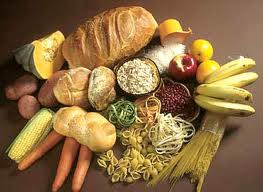
Good Carbs, not No Carbs?
Some popular diets treat carbohydrates as if they are evil, the root of all body fat and excess weight. That was certainly true for the original Atkins diet, which popularized the no-carb approach to dieting. And there is some evidence that a low-carbohydrate diet may help people lose weight more quickly than a low-fat diet, although so far, that evidence is short term.
No one knows the long-term effects of eating little or no carbohydrates. Equally worrisome is the inclusion of unhealthy fats in some of these diets.
If you want to go the lower carb route, try to include some fruits, vegetables, and whole grain carbohydrates every day. They contain a host of vitamins, minerals, and phytonutrients that are essential for good health and that you can't get out of a supplement bottle. And do your heart a favor by choosing healthy fats and proteins to go along with those healthy carbohydrates: A 20-year prospective study of 82,802 women looked at the relationship between lower carbohydrate diets and heart disease; a subsequent study looked at lower carbohydrate diets and risk of diabetes. Women who ate low-carbohydrate diets that were high in vegetable sources of fat or protein had a 30 percent lower risk of heart disease and a modestly lower risk of type 2 diabetes, compared to women who ate high-carbohydrate, low-fat diets. But women who ate low-carbohydrate diets that were high in animal fats or proteins did not have a reduced risk of heart disease or diabetes.
Monday, August 2, 2010
Eat a variety of Fruits and Vegetables everyday

Vegetables and fruits are clearly an important part of a good diet.
Almost everyone can benefit from eating more of them, but variety is as important as quantity.
No single fruit or vegetable provides all of the nutrients you need to be healthy.
The key lies in the variety of different vegetables and fruits that you eat.
Try these tips to fit more fruits and vegetables into your day:
# Keep fruit out where you can see it. That way you'll be more likely to eat it. Keep it out on the counter or in the front of the fridge.
# Get some every meal, every day. Try filling half your plate with vegetables or fruit at each meal. Serving up salads, stir fry, or other fruit and vegetable-rich fare makes it easier to reach this goal. Bonus points if you can get some fruits and vegetables at snack time, too.
# Explore the produce aisle and choose something new. Variety is the key to a healthy diet. Get out of a rut and try some new fruits and vegetables—include dark green leafy vegetables; yellow, orange, and red fruits and vegetables; cooked tomatoes; and citrus fruits.
# Bag the potatoes. Choose other vegetables that are packed with more nutrients and more slowly digested carbs.
# Make it a meal. Try some new recipes where vegetables take center stage.
Saturday, July 31, 2010
BREAKFAST: Why so important?

Why is Breakfast so important?
After a good night's rest, your blood sugar, or glucose levels, are very low since you've been asleep without a meal for 6-10 hours. Your body is basically running on empty in the morning.
Eating a big meal at breakfast time will 'break the fast' and replenish those glucose levels. Glucose is your body's source of energy.
Energy for the Brain
Your brain feeds on glucose, but does not store glucose. You'll be more sharp and have better concentration when you've had a big breakfast. If you've got important work to do in the morning, be sure to eat big so your brain isn't running on fumes.
Energy for your Muscles
Glucose also feeds your muscles, so you'll feel less tired and have more energy overall, with a big breakfast.
Having donuts and sugary products will give you a quick spike in glucose, followed by a large drop, and then leave you hungry again to gain more weight. You don't want that.
This is why it's important to eat a nutritious and healthy breakfast that is loaded with 100% whole grains, since they will digest evenly and keep you energetic throughout the day.
Lose Weight with a Big Breakfast
Studies have shown that people who skip breakfast are generally heavier than people who eat a nutritious breakfast.
If you're having trouble eating in the morning, start with something small and work your way up. You can try a piece of toast and peanut butter, and gradually work up to become a Master Chef with your breakfast.
With a hearty breakfast, you will not be as hungry during lunch time, and you can taper down your meals throughout the day so when the evening rolls around, you're barely eating anything - and ready for bed.
It all works out nicely!
What to Eat?

The human body needs several nutritients found in food such as Proteins, Carbohydrates and Fats. Some are essential some are not.
An essential nutrient is a nutrient your body NEEDS and CAN'T metabolize ("build"). You MUST bring it with your food.
To be able to do so, you should vary your nutritional intake at each meal.
"Meat and Vegetables, Nuts and Seeds, Some Fruits, Little Starch and NO SUGAR"
- CrossFit -
Proteins: Lean meat and fish should account for about 30% of your total caloric load.
Carbohydrates: Vegetables and Fruits. Low-glycemic and about 40% of your total caloric load.
Fats: Monounsaturated. 30% of your total caloric load.
Calories: Calories measure energy, especially heat energy. One calorie is the energy required to raise the temperature of one gram of water by one degree Celsius. I.e.: The energy intake from Proteins should be between 0.7 and 1.0 grams of Protein per pound of lean body mass depending on physical activity level. The 0.7 figure is for the moderate athlete while the 1.0 figure is for the hardcore athlete .
Nutrition: The importance of food

The purposes of food are to promote growth, to supply force and heat, and to furnish material to repair the waste which is constantly taking place in the body. Every breath, every thought, every motion, wears out some portion of the delicate and wonderful house in which we live. Various vital processes remove these worn and useless particles; and to keep the body in health, their loss must be made good by constantly renewed supplies of material properly adapted to replenish the worn and impaired tissues. This renovating material must be supplied through the medium of food and drink, and the best food is that by which the desired end may be most readily and perfectly attained. The great diversity in character of the several tissues of the body, makes it necessary that food should contain a variety of elements, in order that each part may be properly nourished and replenished.
Subscribe to:
Posts (Atom)